What is sustainable agriculture?
- Nov 23, 2015
- 4 min read

Sustainability is defined as the quality of not being harmful to the environment or depleting natural resources, and thereby supporting long-term ecological balance. The sustainable and organic food movement has gained traction in the last decade or so, but many people are still not fully aware of all the benefits sustainable agriculture has, and the strategies used to achieve a productive, sustainable system.
Problems with Industrial Agriculture
Soil Erosion
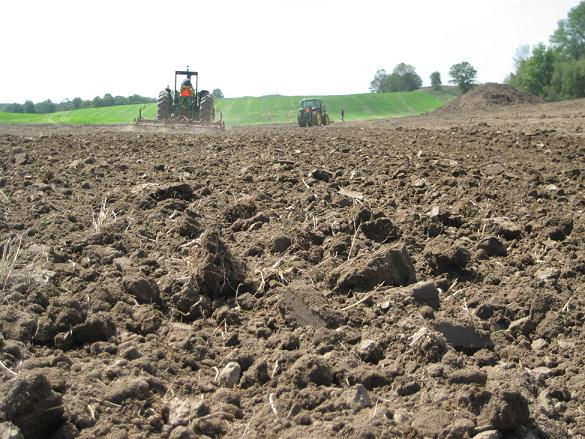
Conventional agricultural methods degrade cropland soil at unsustainable rates. It is estimated that 10 million hectares of cropland are abandoned every year, while 4 million hectares of “new” land are cleared to keep up with our rising population’s food necessity (Kohn et al). This increases the rate of deforestation (Kohn et al). Additionally, as topsoil is lost, organic matter in soil also decreases, resulting in a need for more fertilizers and water in order to efficiently produce crops.
Water
In addition to providing nutrients to crops, organic matter in soil helps to retain water. Without this matter, more and more water is required to keep crops thriving. Unsurprisingly, irrigation is the largest use of our global water supply. Approximately two-thirds of all water usage is attributed to our agriculture (Horrigan et al). While crops do require water to grow, our water is often mismanaged and used excessively. One major issue with water usage in America’s agriculture is that much of our produce comes from California. California is currently experiencing a drought that could possibly be a part of a larger “mega-drought”, yet they still lead the nation in agriculture (Rice). How is this possible? Farms in California rely heavily on the groundwater available to them, yet they are slow to adopt less water-wasting strategies (like drip irrigation) ("Watering California's Farms."). Instead, they continue to go about business as usual, which harms the soils ability to store this precious groundwater ("Watering California's Farms."). These water-wasting systems are not just in California, but are common across the United States. Farmers are slow to adopt newer, more sustainable, strategies of watering crops.

Pesticides
Pesticides are used widely by farmers to control insects and other plants from affecting their crop yields. Over one billion pounds of pesticides are used in the United States each year (Alavanja). Approximately 70,000 pounds of these pesticides never make it to their intended locations due to pesticide drift ("Introduction to Pesticide Drift."). Pesticide drift is extremely hazardous, as it can harm the wildlife surrounding these farms ("Introduction to Pesticide Drift."). Additionally, these pesticides can be detrimental to our health if they get into streams or are inhaled. Globally, about 2 million people experience pesticide poisoning each year, and about 10,000 of these cases are fatal (Horrigan et al). Pesticides have also been linked to long-term effects such as cancer (Horrigan et al).

Manure
Traditionally, livestock manure has been used to fertilize crops in a natural way. However, concentrated animal feeding operations accumulate far too much manure for this to be possible, resulting in “manure lagoons” that are both aesthetically and environmentally unfriendly. These lagoons often fail and release massive amounts of manure into nearby streams, which kills off wildlife and pollutes our drinking water (Sherman). Additionally, livestock manure is credited as being one of the major contributors to ammonia released in our atmosphere (Sherman).

Strategies of Sustainable Agriculture
Soil Enrichment
Sustainable farming utilizes natural techniques in order to keep the soil productive, which eliminates the need for chemical fertilizers. Crop rotation allows different crops (like soybeans) to add nutrients to the soil ("Sustainable Agriculture Techniques."). Additionally, these farmers make use of cover crops, which also replenish the soil, and significantly reduce soil erosion ("Sustainable Agriculture Techniques."). Sustainable farmers also make use of composted organic material and animal manure in order to naturally fertilize ("Sustainable Agriculture Techniques.").

Water Conservation
Sustainable agriculture does its best to conserve water. No-till and low-till systems are frequently adopted in order to minimize soil disturbance, which will maximize soil retention of water and nutrients (Horrigan et al). Drip irrigation is another way to conserve water, because water is distributed to the roots of the plant during the cooler times of the day, which reduces wasted water ("10 Ways Farmers Are Saving Water."). Capturing rain water in man-made ponds is another tactic used by sustainable farmers ("10 Ways Farmers Are Saving Water."). The above-mentioned soil enrichment strategies also work to conserve water in these farms.

Natural Pest Management
There are many natural ways to deter pests. One very common way is crop rotation, because pests tend to prefer specific crops, and without that constant food supply, many may leave or die off ("Sustainable Agriculture Techniques."). Monocultures are especially susceptible to pests because they provide a consistent food supply for the pests that favor those crops. Farmers are also making use of natural predators of the pests, because they take care of the problem for the farmers ("Sustainable Agriculture Techniques."). Integrated Pest Management strategies, which emphasize pesticides as a last resort, are used in sustainable farming ("Sustainable Agriculture Techniques.").

Manure
Sustainable agriculture makes use of the traditional method of using livestock manure as fertilizer. Not only does this cut down on costs, it also eliminates the risk of chemical fertilizer getting into the waterways.

Our industrialized system tends to create and worsen problems for itself. In our current system, as more land is degrading, more chemicals are being used, which degrades the land even more. In contrast, a sustainable system has the potential to be just as productive, without the excessive reliance on dangerous chemicals. A sustainable system is necessary in the long-term, or else the industrial system may destroy itself, resulting in disastrous food shortages across the globe.

Comments